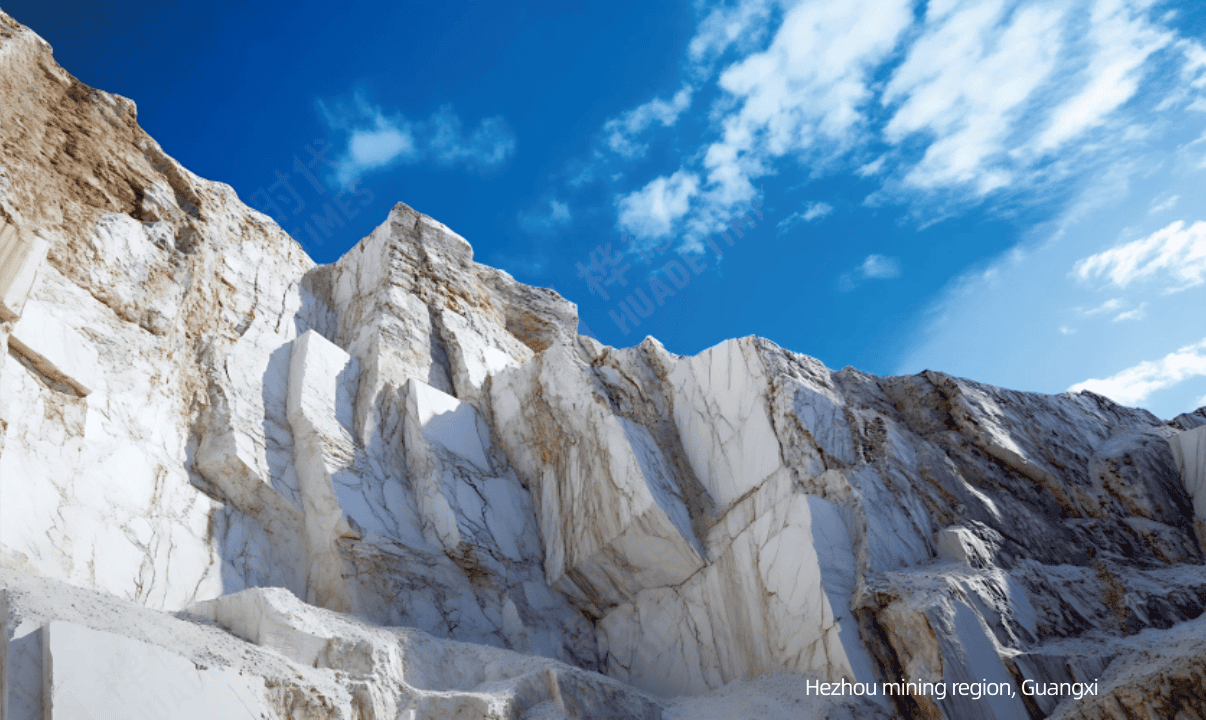
Mineral origin
The manual describes marble powder and other mineral inputs from Hezhou, including the use of stone-processing by-products in wall materials.

145# / INORGANIC NEW MATERIALS
Starting with mineral ingredients including marble powder from Hezhou, 145# connects masonry, thin plaster, functional mortars and mineral finishes. Product documents support its material, application and environmental information.
MINERALS AT THE HEART OF THE WALL
Built around mineral ingredients including marble powder, the 145# range connects masonry, thin plaster, functional mortars and decorative finishes. Its focus goes beyond appearance to bonding, application and the needs of each wall.
145# / MINERAL MATERIALS
The manual describes marble powder and other mineral inputs from Hezhou, including the use of stone-processing by-products in wall materials.
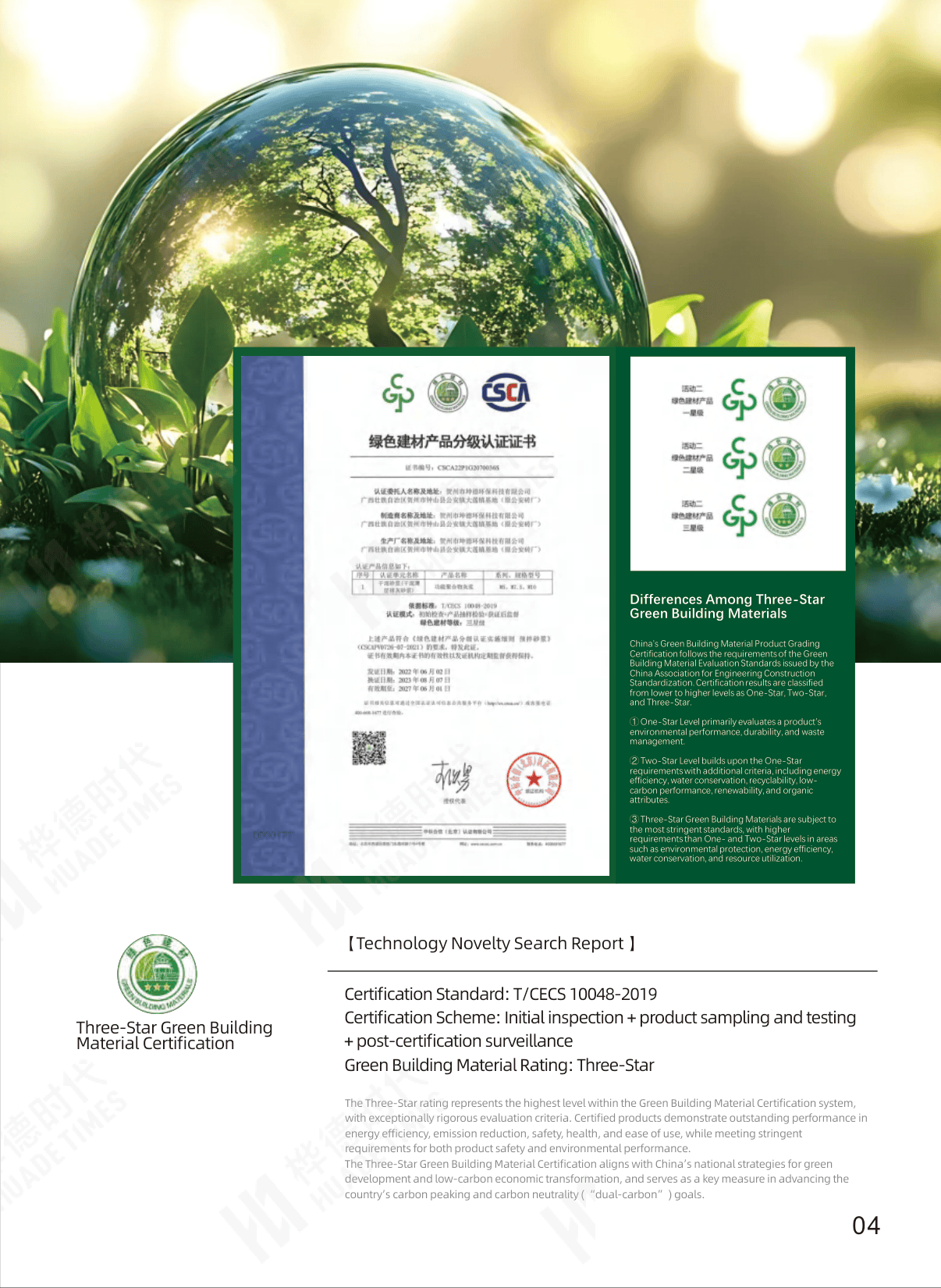
The manufacturer describes penetration, silicification and anchoring. A suitable, well-prepared substrate and product-specific application remain essential.
Masonry and plaster mortars, functional layers and mineral finishes are selected for the wall and project, rather than changing only the final coat.
RESOURCE USE · INDOOR TESTING · THIRD-PARTY DATA
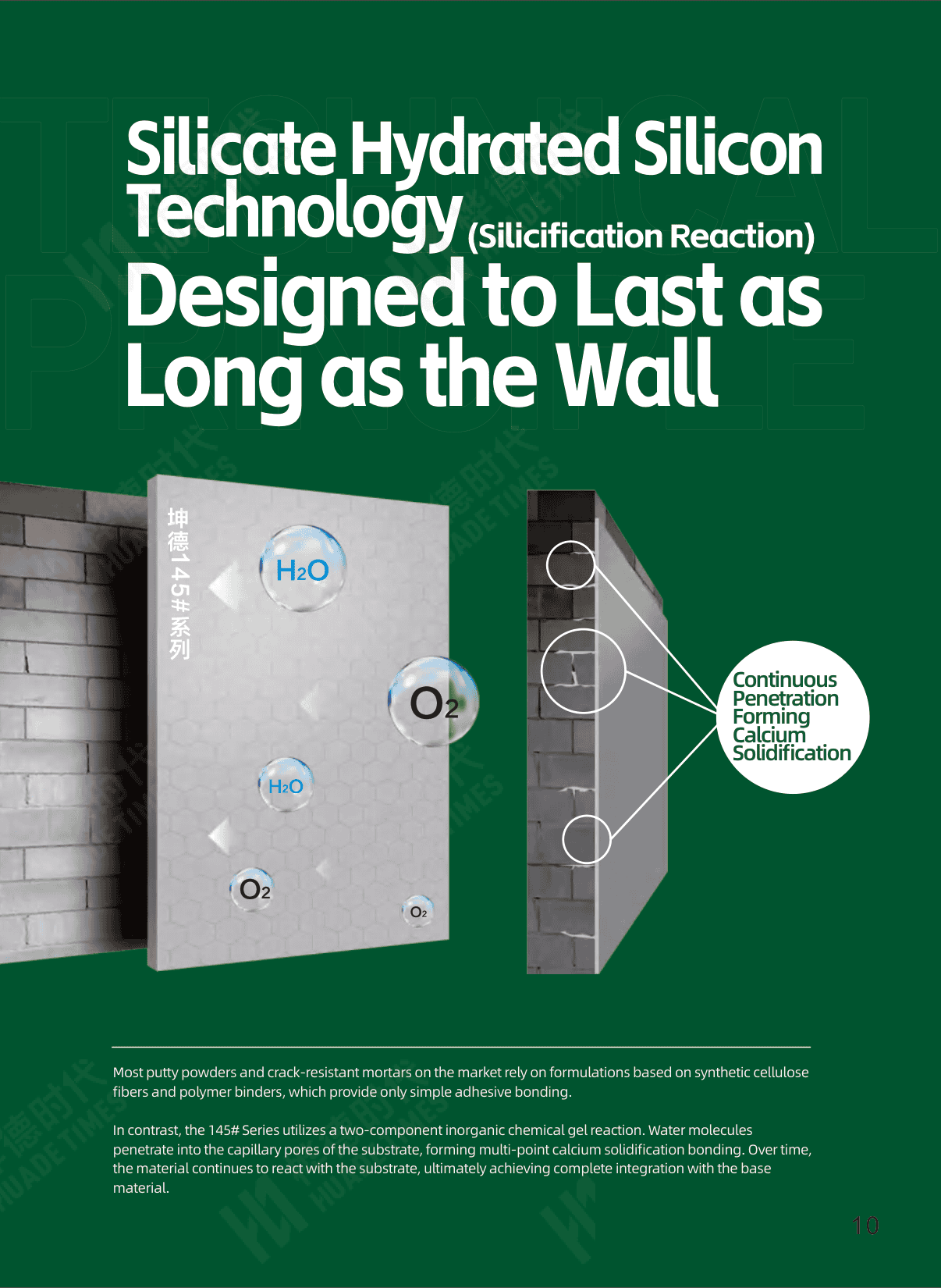
From Hezhou stone powder to emissions testing, green building certification and environmental declarations, each environmental claim should be read with its product and report scope.
The manual describes the use of Hezhou marble powder and stone-processing by-products in wall materials.
Read the original PDFA 145# marble dry-powder coating sample met GB 18582-2020 criteria for VOC, formaldehyde, total lead and soluble heavy metals; VOC and formaldehyde were below stated detection limits.
Read the original PDFThe certificate lists functional polymer mortar grades M5, M7.5 and M10; it does not automatically cover the entire 145# range.
Read the original PDFThe 2021 EPD for thin-coat plaster mortar and coatings discloses environmental impact data from raw-material sourcing through product sales.
Read the original PDFScope: test results apply to the submitted sample. “Not detected” means below the method detection limit, not absolute zero. Certifications and EPDs have defined product and time scopes.
START WITH THE WALL
Wall problems often involve the substrate, material interfaces and application details. The 145# range offers coordinated options from masonry and plaster mortars to functional coats and mineral finishes.
Hollowing, cracks and peeling
Check soundness, cracks and moisture. Match 145# masonry mortar to new blockwork, then level with thin-coat plaster mortar as specified. Repair loose or hollow areas on existing walls first.
Seepage, damp and efflorescence
Address leaks and waterproofing details first. Where water resistance is needed, select the corresponding 145# waterproof mortar and compatible finish. Verify vapour and impermeability claims for each product.
Too many interfaces between trades
Selected dry-powder mineral products can combine parts of levelling and finishing on suitable substrates, reducing material interfaces. Joints, repairs and waterproofing still follow project requirements.
A flat surface with little character
Moonlight White, Pearl White, Han White Stone and Yellow Dragon Stone support smooth, sprayed, pressed and stone-like effects. Confirm grain, colour and location with a physical sample.
Challenges and product directions are based on the 145# manual; process integration follows the system brochure. Specify the actual build-up against site conditions and product data. Read the original PDF ↗
THE BOND IS THE STARTING POINT
The product manual describes penetration, silicification and anchoring for the 145# system. This simplified section illustrates how that differs from a typical resin-emulsion film.
Schematic, not microscopy. It does not indicate penetration depth or formulation proportions.
Check the soundness, moisture condition and cleanliness of a suitable mineral substrate.
According to the product literature, silicification at the interface creates a zone of bonding with the substrate.
Compatible preparation, thickness and application work together to influence adhesion, texture and the finished surface.
FROM SEPARATE LAYERS TO A COORDINATED SYSTEM
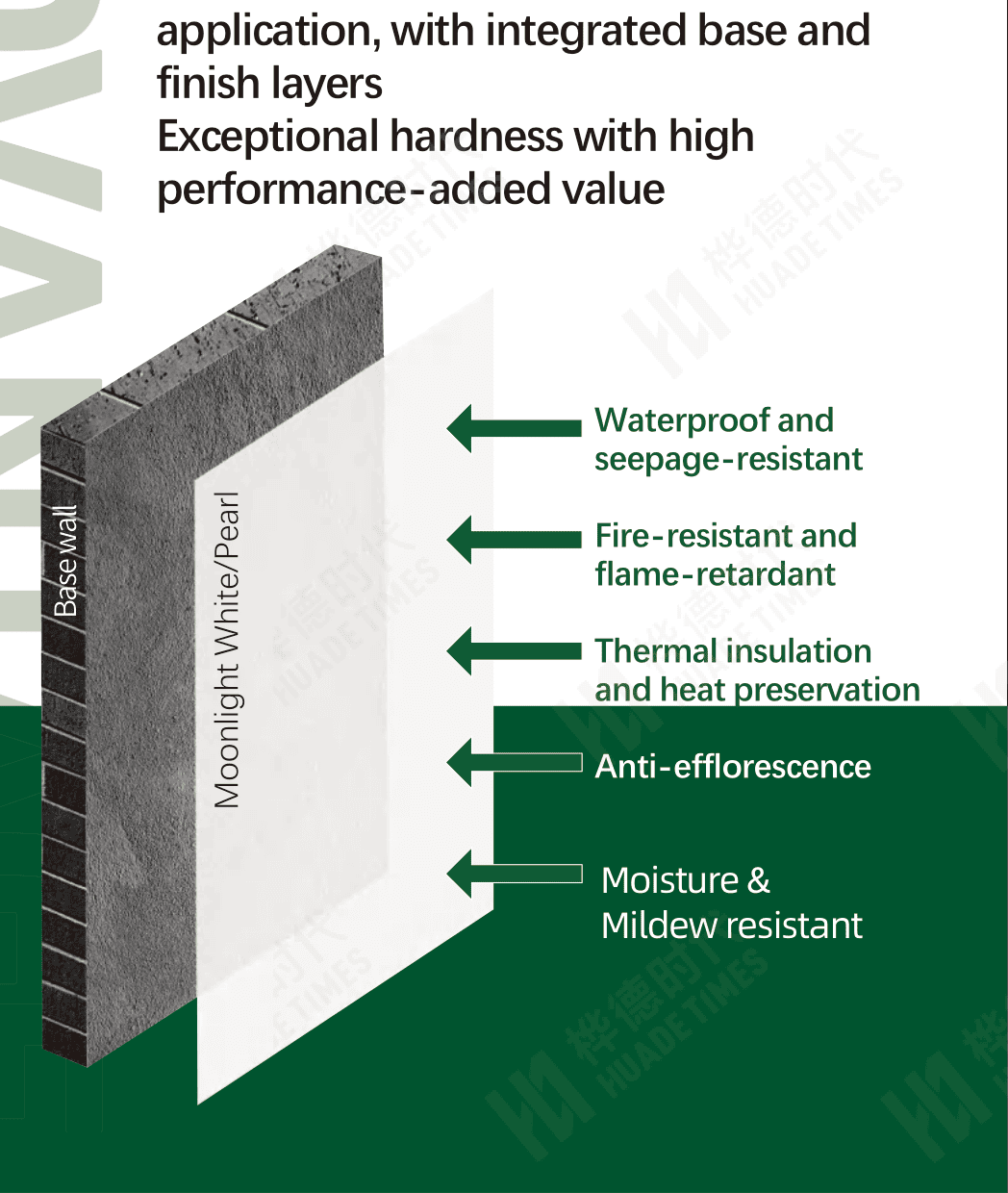
On suitable substrates, selected integrated base-and-finish products can combine parts of the levelling and finishing work. The diagrams below redraw the typical sequences in the system brochure.
Separate materials, coordinated in layers
Provides the final colour and surface effect; performance depends on the formulation.
Selected products combine levelling and finish
Selected 145# dry-powder mineral products combine levelling and finishing where specified, reducing interfaces between separate materials.
The diagrams show material order, not actual thickness. Repairs, interface treatment, joint reinforcement and waterproofing details depend on the substrate and project requirements.
Traditional example: 15–20 daysIntegrated example: 3 days
These examples appear on PDF page 19 of the brochure; area, substrate condition and crew size are not specified. Actual schedules depend on site conditions, thickness, curing and climate. Read the original PDF ↗
| Consideration | Typical putty + emulsion paint | 145# integrated base + finish |
|---|---|---|
| Bonding | Typically forms a resin-emulsion film on the prepared surface. | The literature describes silicification and anchoring with a suitable mineral substrate. |
| Process | Separate plaster, levelling, putty, primer and topcoat stages. | Selected dry-powder products combine levelling and finishing within the specified system. |
| Moisture vapour | Vapour permeability and water resistance vary with resin, film thickness and substrate. | The mineral system emphasises microporous vapour transport; select the appropriate product for water resistance. |
| Appearance | Colour, sheen and texture vary with the selected topcoat. | Mineral grains and application techniques create natural surface texture. |
| Substrate fit | Check compatibility across the putty, primer and topcoat specifications. | Uses compatible mineral materials; existing walls, tiles and special details require assessment. |
This compares typical systems, not every emulsion or inorganic coating. Use the selected product’s technical data, test reports and application requirements for specification.
WHAT MAKES THE SYSTEM DISTINCT
The 145# range brings mineral powders, two-component mortars and multiple finishes into one selection path: assess the substrate and location, then specify bonding, levelling, water resistance and texture. Verify performance against the selected product’s data and reports.
Masonry, plaster, tile-setting and functional mortars connect with mineral finishes across the wall build-up.
The manual describes AB two-component products mixed with water without separately adding sand; follow each product’s stated ratio.
The manual describes penetration, silicification and anchoring with suitable mineral substrates; assess existing or unusual walls first.
Suitable dry-powder products combine some levelling and finishing stages while retaining required repairs and waterproofing.
Thin-coat mortar has water-retention, bond and shrinkage data; verify water and fire requirements in each relevant product report.
Moonlight White, Pearl White and stone-inspired finishes offer fine, sprayed and relief textures to confirm with a physical sample.
145# THIN-COAT PLASTER MORTAR · MANUAL DATA
Values are transcribed from the thin-coat plaster mortar test table on PDF page 11 (printed page 16). They do not apply to every finish. Check the full report and relevant batch when specifying. Read the original PDF ↗
Assess soundness, adhesion, moisture and contamination first. Treat loose, hollow or leaking areas before the technical team specifies materials and interface treatment.
No. Integration combines suitable materials and stages; it does not replace waterproofing design, joint details, structural repair or necessary mesh reinforcement. Follow the project specification.
Select the specific product and review its technical data and full test reports. Use a physical sample and site trial to confirm colour, texture, thickness and substrate suitability.
READ THE PRINCIPLE. CHECK THE SOURCE.
This page draws on the Chinese and English 145# manuals and the HUADE TIMES system brochure. Data and schedule examples have product- and project-specific limits; review the originals and current technical data before specifying.
Principles, inorganic and organic system comparison, performance data and product applications.
Read the original PDFEnglish manual covering product characteristics, bonding principles and thin-coat mortar test results.
Read the original PDFSystem compatibility, process structure and integrated base-and-finish examples.
Read the original PDFYOUR WALL. YOUR SYSTEM.
Tell us about your substrate, environment and preferred texture to discuss a suitable material and application approach.